

Civil society partners on the Conference Organizing Committee ensure that your priorities, experiences and concerns shape IAS conferences.
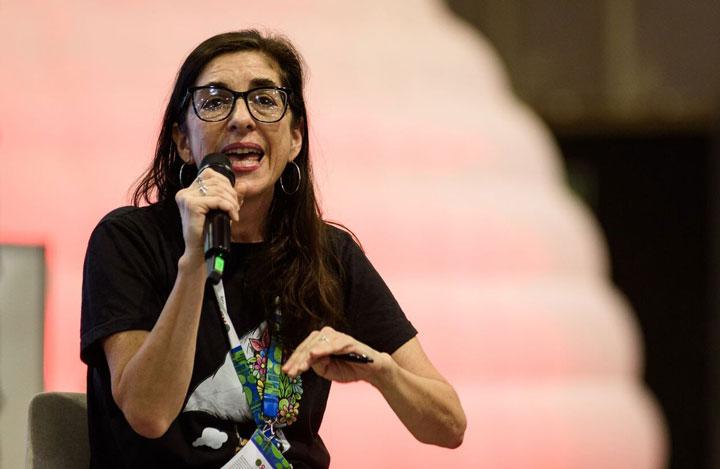
Four civil society partners sit on the Conference Organizing Committee. Civil society partners drive the community components of the IAS 2027 programme, shape community activities, and are the key contacts for engaging community networks.
Together, their skills and experience provide comprehensive representation across the HIV response with each of their professional backgrounds representing one of the following: an HIV service delivery or programme implementation organization; a global advocacy network; a global network representing people living with HIV; or a local civil society representative.
Communities are represented by three civil society representatives on the IAS Conference Committee: one serves a four-year term, and two seats rotate every two years to ensure broad participation of community voices. In addition, a local/regional civil society representative is appointed for each conference and serves for the duration of its preparation and delivery.
The IAS Conference Committee is responsible for the strategic planning of all IAS conferences taking place over a four-year cycle to ensure continuity, consistency and responsiveness to the needs of the HIV field and alignment with IAS strategic priorities.
Together, the IAS Conference Committee and rotating members of the Conference Organizing Committee are responsible for programme development, speaker selection and support, abstract review and selection, and scholarship award guidance and review.
For the civil society partners seats, the IAS Executive Board, with the support of the IAS Secretariat, seeks applications from individual candidates in collaboration with civil society networks. The board uses a competency framework to identify gaps and assess the extent to which candidates complement the existing skill set on the committee. Selections are also based on candidates’ motivation, level of experience and mobilization capacity.
Civil society partners are an integral part of the Organizing Committee and take part in all the meetings and discussions in preparation for the conference.
Meet the civil society partners
The IAS 2027 civil society partners are:
Brent Allan, Australia, ASHM – Australasian Society for HIV, Viral Hepatitis and Sexual Health Medicine, Australia: Representative of an HIV service delivery or programme implementation organization

Luciana Kamel, Brazil, Instituto Nacional de Infectología Evandro Chagas (INI-Fiocruz): Representative of a global advocacy network
Pankaj (Pank) Sethi, UK, Positive East: Representative of a global network representing people living with HIV

Florian Vock, Switerland, Aids-Hilfe Schweiz: Local civil society representative

The IAS 2027 civil society partners come from a diverse and equitable network of key and affected populations. Their outreach projects ensure that a full range of communities and sectors affected by HIV are increasingly engaged in conference planning and delivery, which reflects conference values of inclusion, respect and global partnership building.
Why is it important for you?
Civil society partners work closely with the IAS Secretariat and the Organizing Committee throughout the months of preparation for the conference. They serve as a bridge to ensure that community priorities, key issues and challenges are a central part of the conference programme.
If you are an activist, a community-based or civil society organization, please feel free to contact us if you wish to:
- Highlight key issues, challenges, successes and opportunities for civil society in the HIV response
- Suggest topics for symposia at upcoming IAS conferences
- Nominate speakers or moderators
Contact us at conference.community@iasociety.org.
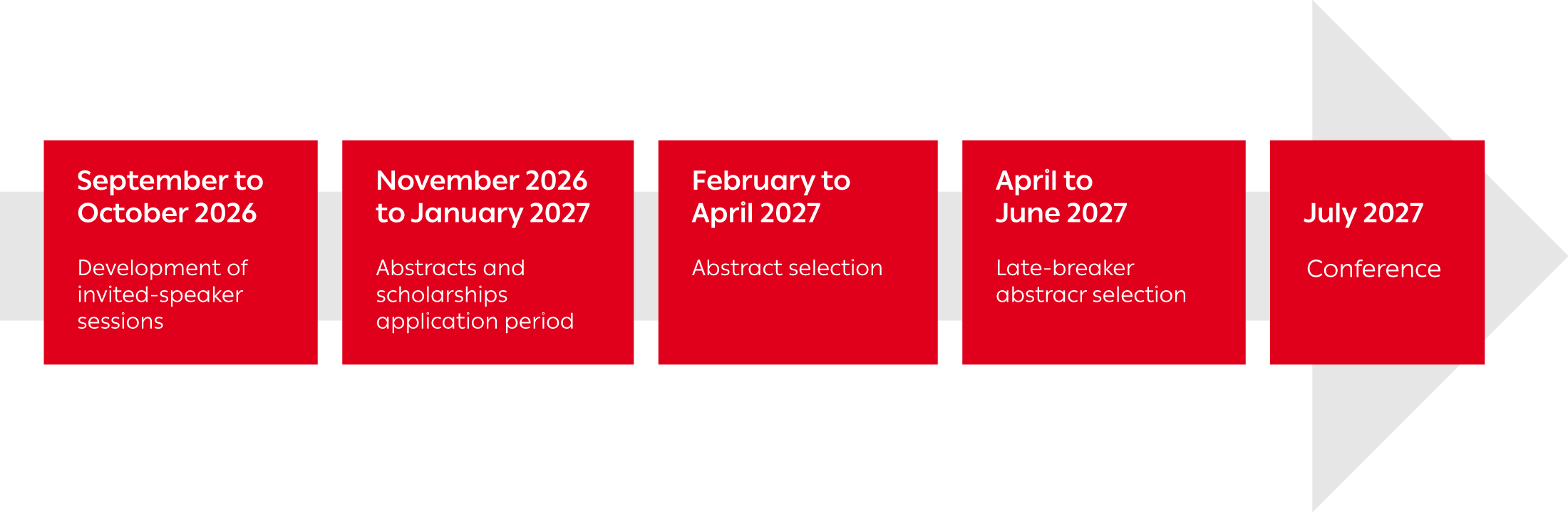
Please keep the timeline shown here in mind. This is so that we can include your requests in conference planning. For example, if you would like to suggest speakers, we need to receive your recommendations before the end of October as this is when we plan the invited-speaker sessions.