
Events

Upcoming events
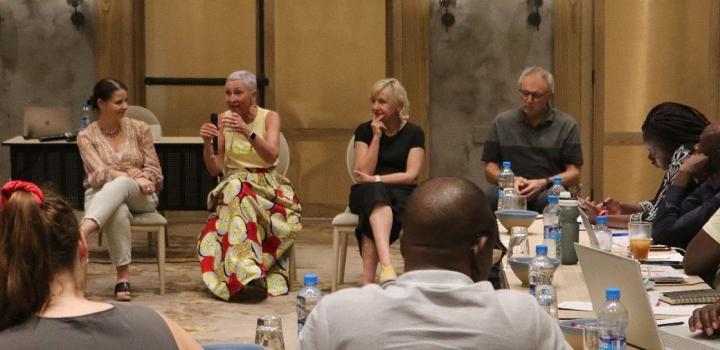
HIV Vaccine Science Academy (6th edition)

23 Nov 2026 - 26 Nov 2026

HIV Vaccine Science Academy (6th edition)

The academy will support 15 early- and mid-career investigators conducting HIV vaccine research in Africa.

View details View details
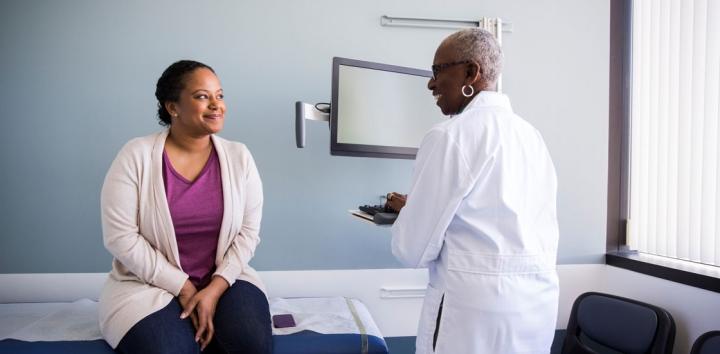
Overcoming barriers to person-centred care for people living with and affected by HIV

24 Nov 2026

Webinar – Overcoming barriers to person-centred care for people living with and affected by HIV

Person-centred care responds to an individual’s comprehensive needs, values and preferences, rather than focusing solely on their clinical condition. Amid constrained global health funding, especially for community-led and peer-delivered care, sustaining progress in person-centred HIV care is increasingly challenging. Reduced access to and disengagement from HIV prevention and care can undermine the well-being and health outcomes of people living with HIV or vulnerable to HIV acquisition.Barriers to person-centred care span several levels, including systemic, social, service design, workforce and financing factors. This webinar will explore recent evidence and case studies that illustrate barriers to person-centred care and spotlight approaches to overcoming them. The expert panel discussion will centre the perspectives of people living with and affected by HIV, examining context-specific strategies to improve access to person-centred and equitable care. Participants will learn how person-centred interventions made at the service-provision level and during client-provider interactions can address structural factors, strengthen care experiences and improve health outcomes. Objectives:Explore recent evidence and case studies that illustrate barriers to person-centred care and help identify facilitators.Highlight the perspectives of people living with and affected by HIV who are seeking care.Provide examples of interventions to strengthen person-centred service delivery and improve client-provider interactions.For more information, please contact pcc@iasociety.org.

View details View details

Geneva, Switzerland

12 Jul 2027 - 15 Jul 2027

The 14th IAS Conference on HIV Science

IAS 2027, the 14th IAS Conference on HIV Science, will take place in Geneva, Switzerland from 12 to 15 July 2027.

View details View details

Past events

26
Multi-country policy workshop: “Simplifying HIV service delivery: From evidence to national policy”
The IAS DSD programme will convene country teams from Malawi, Mozambique and Zambia for a workshop to discuss simplification of HIV service delivery. View details View details
20 Oct 2026
From publication to practice: Translating research for media and the public

Following the public release of HIV science presented at AIDS 2026, the 26th International AIDS Conference, this webinar will equip HIV researchers with practical tools to communicate their science. 

View details View details
19 Oct 2026
Science, policy and community: The next priorities for a sustainable HIV response in Malawi
IAS Educational Fund scientific symposium in Lilongwe, organized in partnership with Partners in Hope View details View details
11 Oct 2026
Advancing equitable, person-centred HIV prevention and care in Europe – a World Health Summit 2026 side event
Invitation-only roundtable on person-centred, community-led HIV prevention, care and policy at WHS 2026 View details View details
15 Sep 2026
Key messages from AIDS 2026
This webinar will provide participants with scientific, policy and funding highlights from AIDS 2026. View details View details
26 Jul 2026
AIDS 2026 pre-conference: 12th Symposium on Children and Adolescents with Perinatal HIV Exposure

As of 2024, an estimated 16 million children under 15 years of age had been perinatally exposed to HIV globally and were born HIV-free. An expanding body of evidence shows that these children experience a higher likelihood of infectious morbidity, mortality, impaired growth and suboptimal neurodevelopmental and cognitive outcomes than peers born to mothers without HIV, with the aetiology of these adverse outcomes reflecting an interplay of biological, social and structural factors.

View details View details

The IAS promotes the use of non-stigmatizing, people-first language. The translations are all automated in the interest of making our content as widely accessible as possible. Regretfully, they may not always adhere to the people-first language of the original version.